

Table of Contents
Introduction
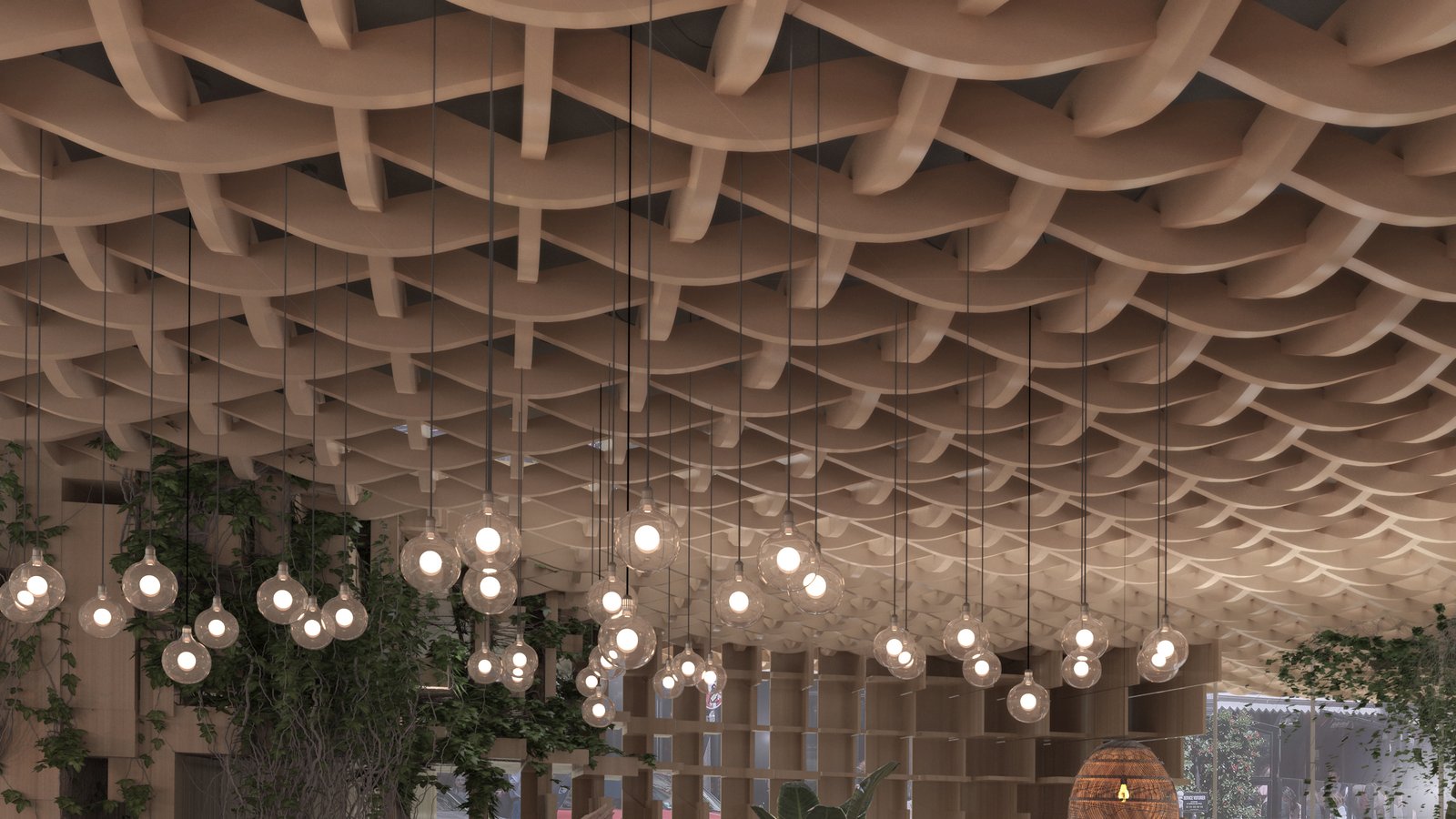
Parametric acoustic ceiling design is rapidly becoming a defining strategy in high-end hospitality architecture. Restaurants today require environments where lighting, materiality, and sound performance work as a unified spatial experience.
This case study explores how Relics Forge | Textile enables designers to develop a woven acoustic ceiling system using rule-based textile logic. The project demonstrates how parametric design can translate acoustic consultancy requirements, mechanical infrastructure, and fabrication constraints into a controlled and buildable architectural surface.
Project Overview
Project Type: Luxury Restaurant Interior
Design Element: Suspended acoustic ceiling system
Primary Goal: Improve acoustic comfort while strengthening spatial identity
Design Method: Parametric textile-based geometry
Fine dining environments depend heavily on acoustic clarity. Excessive reverberation can compromise guest experience, while overly absorptive surfaces can reduce spatial vibrancy. The design objective was to develop a ceiling system that balances acoustic performance with sculptural visual expression.
The Design Challenge
Developing a parametric acoustic ceiling design required addressing multiple overlapping constraints:
• Acoustic consultant absorption targets
• Integration of lighting and HVAC systems
• Coordination with sprinkler and safety infrastructure
• Maintainability and access requirements
• Fabrication-ready modular geometry
Conventional modeling workflows typically separate performance design from visual form. Relics Forge | Textile merges both aspects into a single generative system.
Why do you need a parametric engine to produce acoustic qualities?
Parametric acoustic ceiling design allows designers to embed sound performance directly into spatial geometry. Instead of applying acoustic treatment as an additional layer, performance becomes part of the design logic.
Using Relics Forge | Textile enables:
• Adjustable porosity through textile density control
• Local acoustic variation without visual disruption
• Scalable modular fabrication strategies
• Continuous coordination between design and production
Design Workflow Using Relics Forge | Textile
1. Translating Textile Logic into Architecture
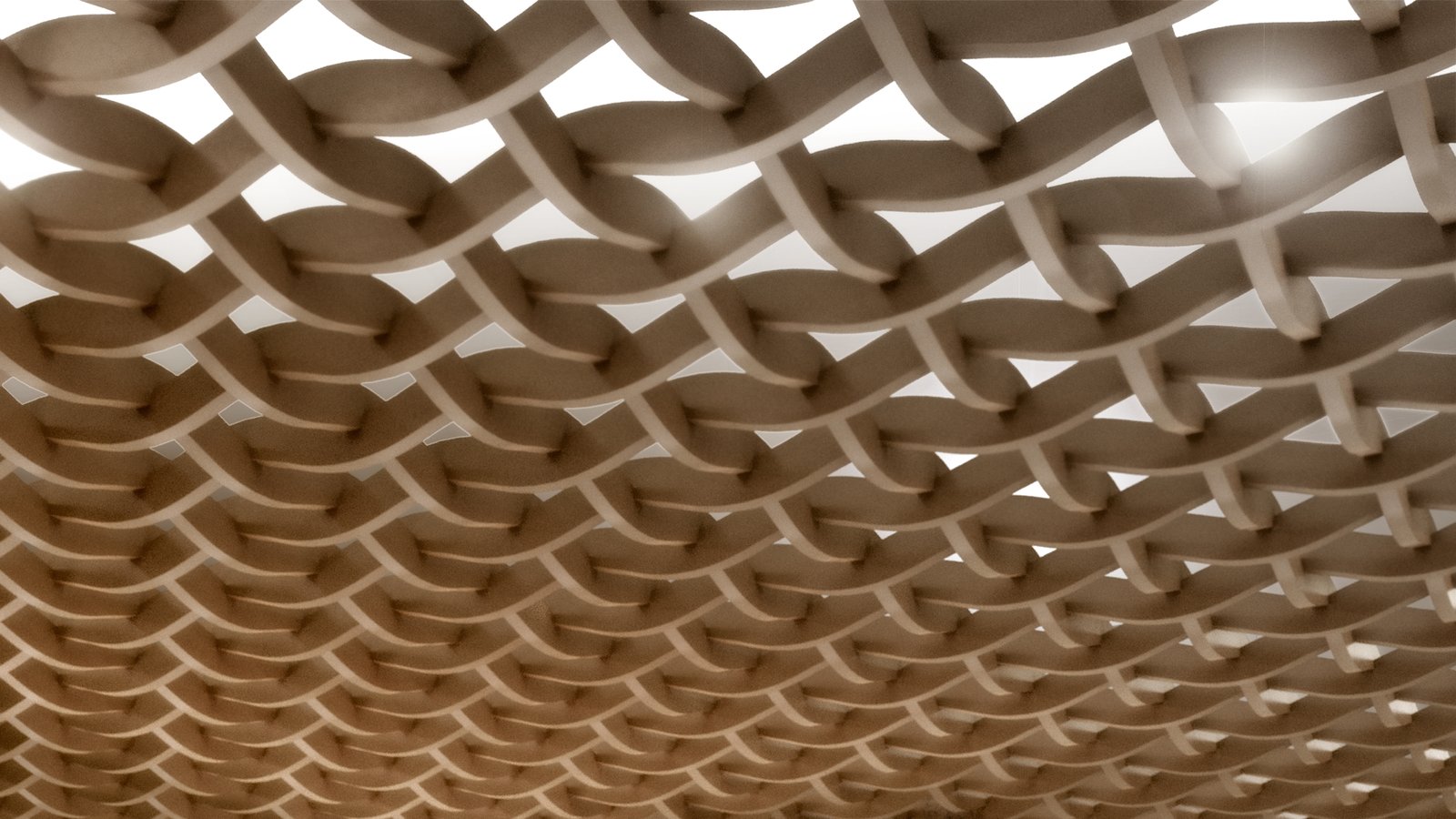
The design began with a simple warp-and-weft textile pattern. Within Relics Forge | Textile, this pattern functions as a generative rule set rather than decorative texture.
Designers controlled:
• Thread spacing
• Pattern frequency
• Structural reinforcement locations
• Spatial curvature behavior
This approach allows textile logic to operate across multiple scales, from individual strands to full ceiling assemblies.
2. Acoustic Performance Optimization
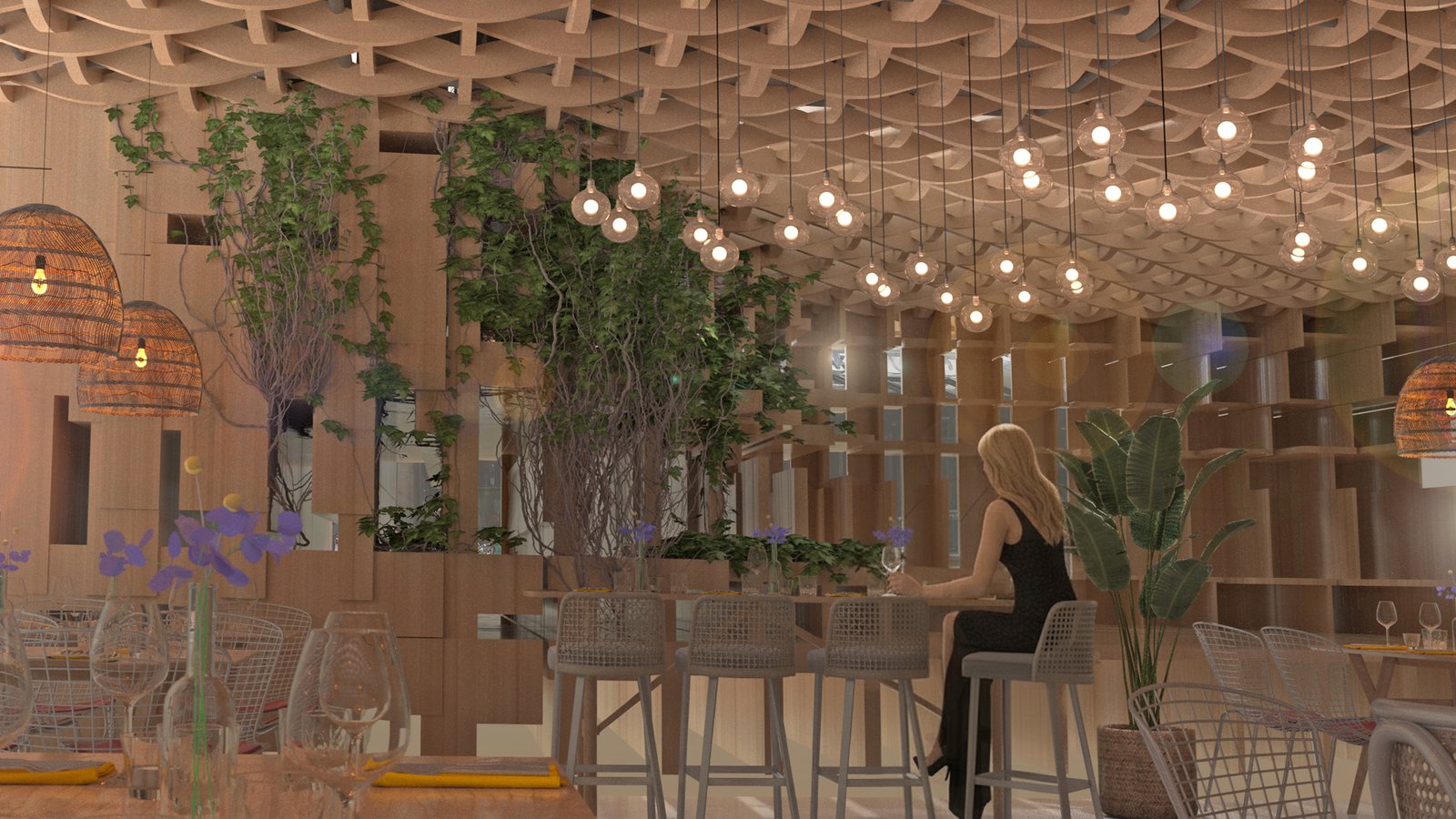
Acoustic consultancy defined target absorption zones across the dining area. The parametric acoustic ceiling design responded through localized variation of textile density.
Relics Forge allowed real-time adjustments of:
• Open-to-solid ratios
• Directional sound diffusion
• Pattern transitions between performance zones
By embedding acoustic behavior directly into geometry, designers eliminated late-stage retrofitting.
3. Infrastructure Integration
A major advantage of parametric acoustic ceiling design is system coordination. The woven geometry was adapted to accommodate:
• Lighting fixtures
• Air supply diffusers
• Fire suppression systems
• Structural suspension anchors
Relics Forge generated reinforcement logic around mechanical openings while maintaining pattern continuity.
4. Fabrication and 3D Printed Prototyping
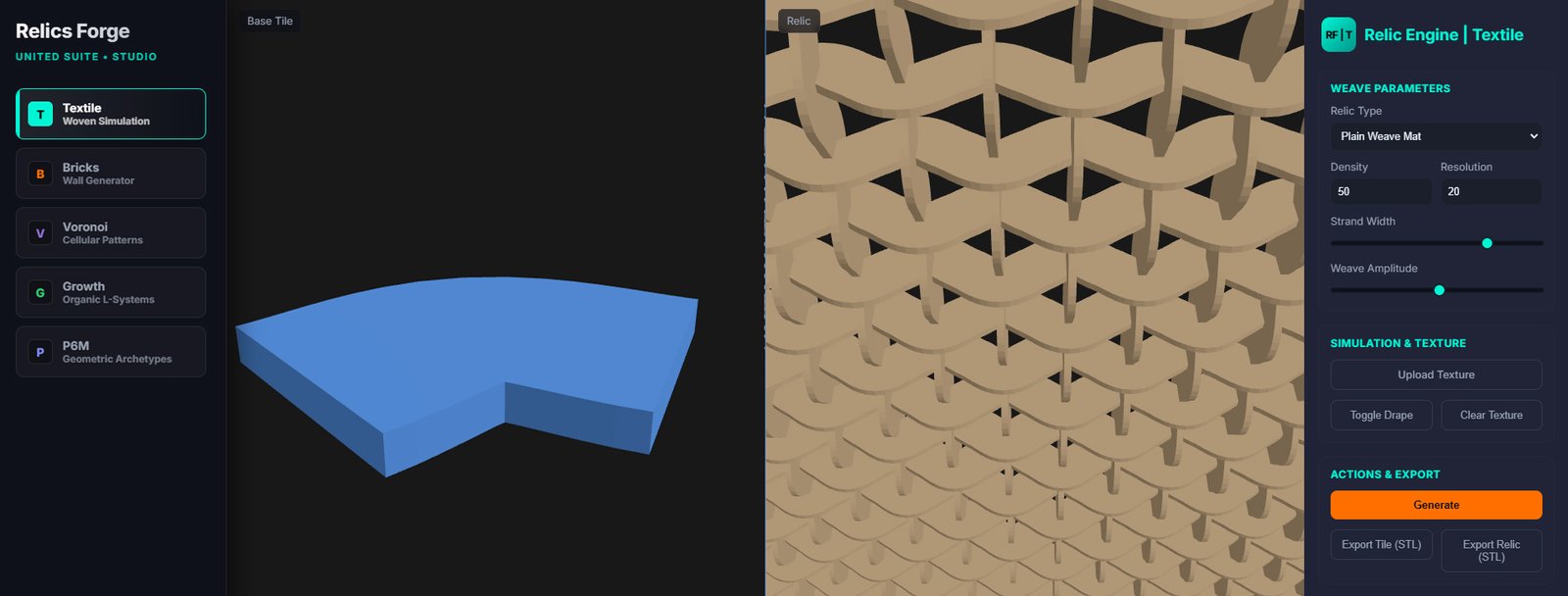
To validate performance and visual quality, the textile ceiling module was exported for additive manufacturing.
The physical prototype allowed the design team to evaluate:
• Structural rigidity
• Material thickness relationships
• Light diffusion through textile openings
• Tactile spatial rhythm
This step reduced risk and enabled early client validation.
Project Outcome
The final ceiling installation achieved a balance between technical performance and architectural identity.
The parametric acoustic ceiling design successfully delivered:
• Enhanced speech clarity and sound comfort
• Continuous sculptural textile expression
• Efficient modular fabrication
• Seamless integration with building infrastructure
The system remains legible as textile logic while functioning as a high-performance architectural surface.
Why Designers Use Relics Forge | Textile
Relics Forge | Textile is built for designers working with performance-driven surfaces. The platform enables a seamless transition from textile logic to architectural fabrication.
Key advantages include:
• Real-time parametric acoustic ceiling design control
• Direct translation of performance data into geometry
• Rapid prototyping workflows
• Fabrication-ready modular output
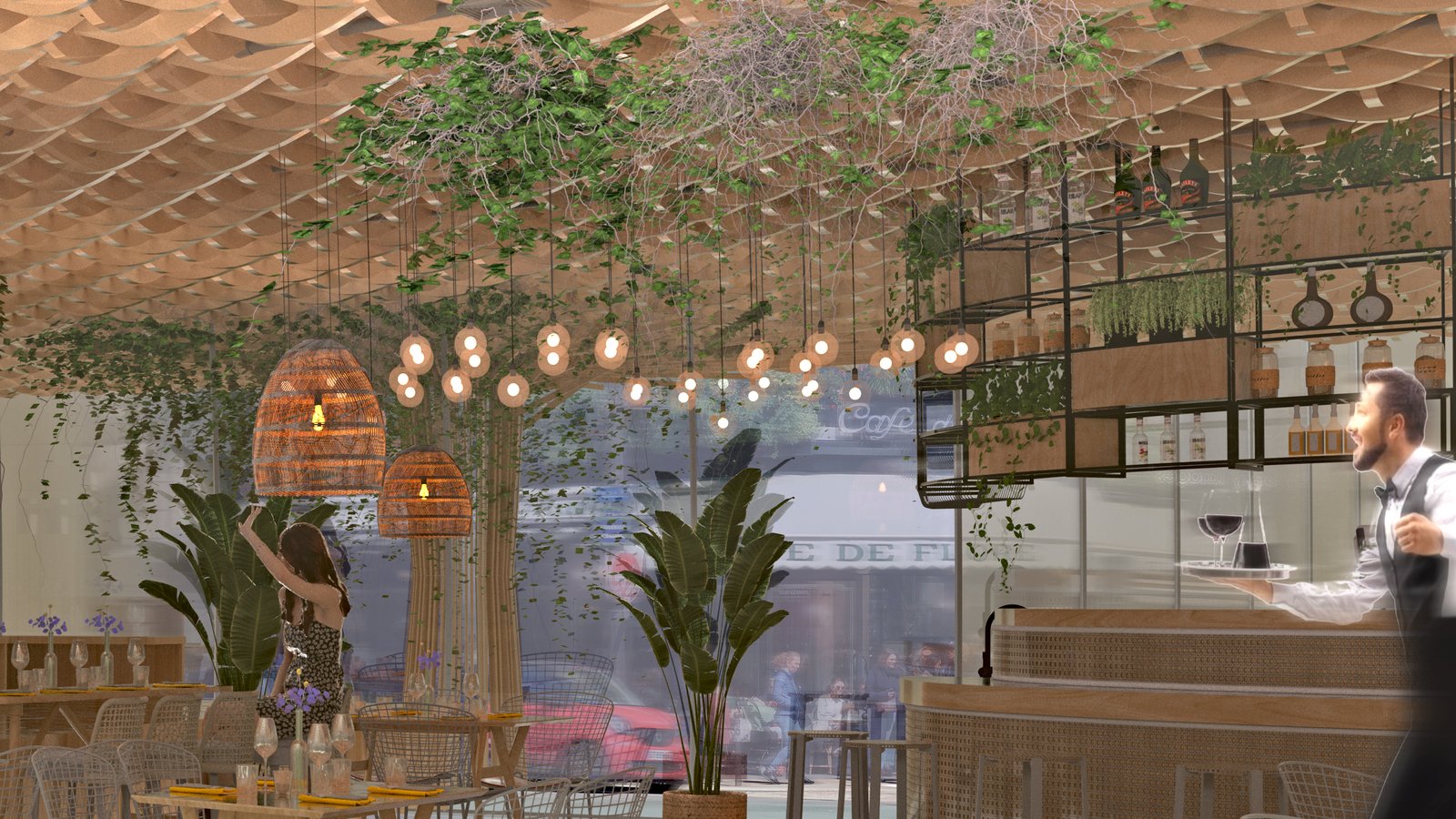
From Concept to Performance-Driven Reality
Hospitality environments demand immersive experiences that combine comfort, performance, and visual identity. Parametric acoustic ceiling design allows designers to meet all three requirements simultaneously.
Relics Forge | Textile empowers architects and designers to develop woven architectural systems that are measurable, testable, and buildable.
👉 Start designing performance-driven textile systems today with Relics Forge.
Design with logic. Design with performance. Design for reality.
Related Reading
Explore how parametric surface logic is applied to facade cladding systems in our panel design case study:
For broader research on acoustic architecture strategies, refer to:
https://www.archdaily.com/search/projects/categories/acoustics
Leave a Reply