

Table of Contents
Procedural surfaces for VFX and environment design
A parametric pattern generator can function as a powerful procedural surface engine for VFX artists, environment designers and digital media creators.
In modern VFX production, procedural systems are widely used to generate textures, materials and complex surface structures automatically. Instead of manually painting textures or modeling every variation, artists rely on rule-based systems that generate geometry dynamically.
A parametric pattern generator enables artists to create procedural surfaces by adjusting parameters such as cell density, tessellation logic, structural flow and surface depth.
Small parameter changes can produce entirely new visual outcomes.
Procedural workflows are common in tools such as Houdini and Blender, where artists generate environments through algorithmic rules rather than fixed assets.
These workflows allow artists to build large digital environments, cinematic surfaces and procedural materials that can be modified instantly.
RelicsForge can therefore function not only as an architectural design tool but also as a procedural surface generator for VFX environments and digital media production.
What is a parametric pattern generator
A parametric pattern generator is a system that creates geometric patterns through adjustable parameters rather than fixed templates.
Instead of selecting a predefined pattern from a library, designers control the rules that generate the geometry.
Parameters such as:
• density
• tessellation logic
• cell structure
• flow direction
• relief depth
can all be modified dynamically.
Because of this, a parametric pattern generator does not simply produce images. It produces systems.
Each parameter change modifies the underlying geometry and allows designers to generate multiple variations quickly.
This approach is widely used in architecture, digital fabrication and procedural design workflows.
Why architects are adopting procedural surface design
Architects increasingly rely on generative systems when designing facade surfaces and architectural patterns.
A parametric pattern generator allows architects to explore many variations of a surface without manually modeling each one.
This approach is particularly useful when designing:
• facade cladding systems
• parametric wall panels
• perforated architectural surfaces
• mashrabiya inspired patterns
• decorative structural skins
Instead of modeling each variation individually, architects adjust parameters and evaluate the results instantly.
Because the underlying geometry remains flexible, the design system can evolve throughout the architectural process.
Procedural surfaces in VFX and game environments
The same generative principles used in architecture are also widely used in VFX production and game development.
A parametric pattern generator can be used to produce procedural surface structures for digital environments.
Artists working in VFX pipelines often rely on procedural systems to generate terrain textures, alien materials and cinematic environment surfaces.
Game environment artists use similar workflows when creating large virtual worlds.
Examples include:
• organic terrain surfaces
• futuristic architectural environments
• alien surface materials
• abstract cinematic textures
Because procedural systems generate surfaces algorithmically, artists can quickly produce multiple variations while maintaining visual consistency.
Parametric texture generation for media production
Advertising studios and media designers increasingly rely on procedural design systems.
A parametric pattern generator allows designers to generate complex visual surfaces that can be used for:
• motion graphics
• advertising backgrounds
• digital installations
• visual media environments
Instead of searching through static texture libraries, designers can generate patterns that respond to creative direction.
This allows media artists to create visual systems rather than fixed images.
Control vs pattern libraries
Traditional pattern design often relies on static pattern libraries.
A designer chooses an image and applies it to a surface.
A parametric pattern generator replaces this process with a generative system.
Instead of selecting a finished pattern, designers control the rules that produce the pattern.
Parameters such as:
• density gradients
• structural flow
• geometric relationships
• relief depth
become part of the design process.
This approach allows designers to create unlimited variations from a single generative engine.
Procedural systems for facade design
Facade design has become one of the most interesting applications of generative systems.
Architectural facades often rely on modular panels that must adapt to environmental conditions and structural constraints.
A parametric pattern generator allows designers to test many surface configurations quickly.
For example, Voronoi systems can generate both organic meshes and structural panel systems depending on parameter adjustments.
Similarly, tessellation engines can produce decorative surfaces that adapt to different scales of architecture.
RelicsForge provides several engines that allow architects to explore these generative surface systems interactively.
Generative surfaces for event and spatial design
Event designers and installation artists often require custom surface systems for temporary structures.
A parametric pattern generator allows designers to prototype these surfaces quickly.
Applications include:
• stage backdrops
• installation panels
• sculptural surfaces
• decorative spatial textures
Because the system remains parametric, the design can evolve throughout the creative process.
Procedural engines without coding
Many generative design tools require scripting knowledge.
RelicsForge approaches procedural design differently.
Instead of writing code, designers interact directly with parameters.
A parametric pattern generator inside RelicsForge allows designers to explore generative geometry using sliders and visual controls.
This allows architects, designers and digital artists to work with procedural systems without complex programming workflows.
Cross-disciplinary design workflows
Procedural surface design is increasingly important because it connects multiple creative disciplines.
Architecture, VFX, game design and digital media all rely on surface systems that define geometry and texture behavior.
A parametric pattern generator can function as a bridge between these fields.
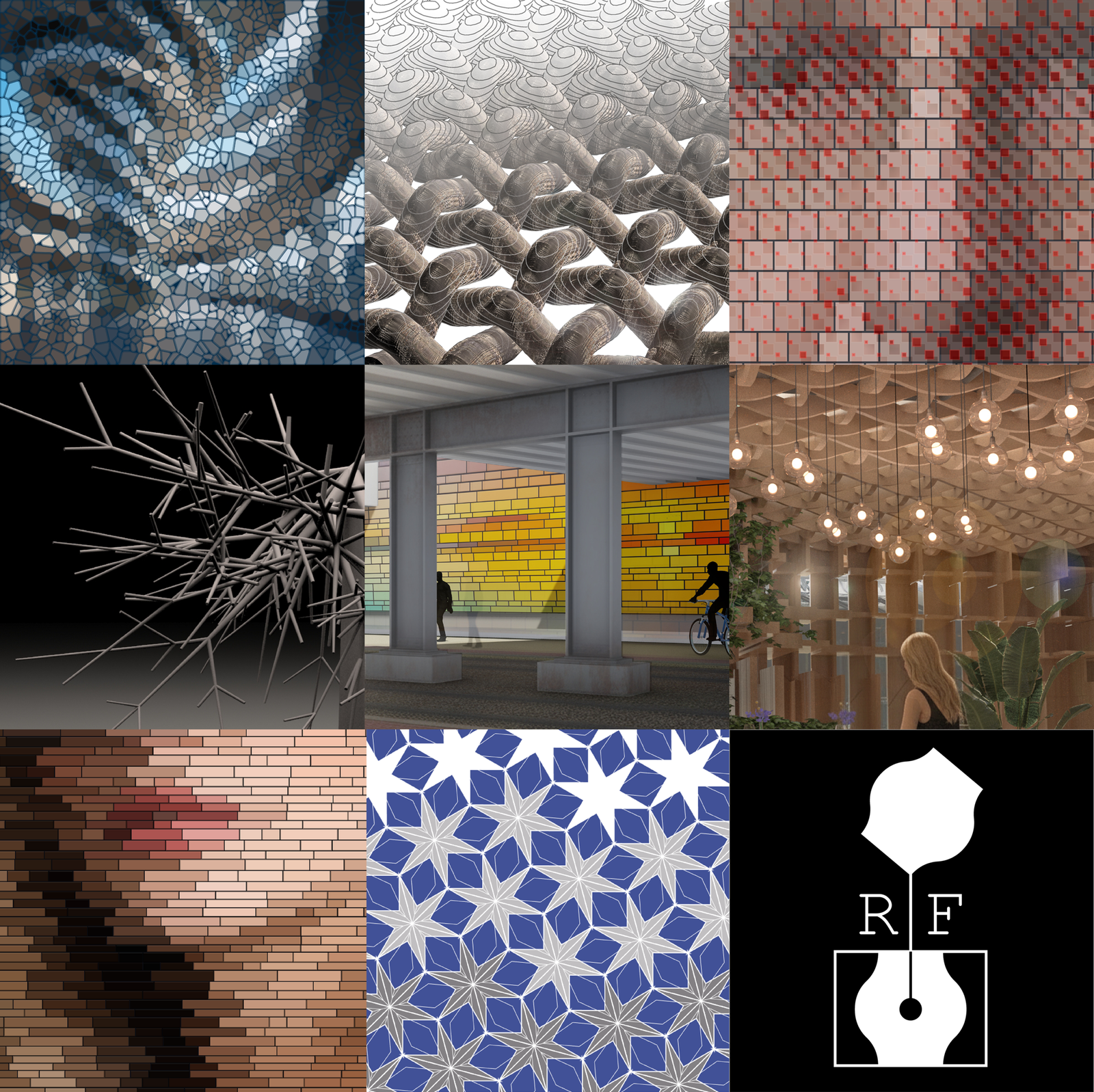
The collage of textures shown in this post demonstrates how a single generative system can produce a wide range of surface structures.
Each surface originates from parameter adjustments rather than manual modeling.
Start exploring procedural surface design
Procedural design is transforming how designers think about surfaces and geometry.
Instead of browsing pattern libraries, designers now create systems that generate patterns dynamically.
A parametric pattern generator allows architects, digital artists and media designers to explore complex surface structures quickly.
RelicsForge provides an accessible environment where designers can experiment with generative surfaces and procedural patterns.
Explore the engines and start designing procedural surfaces today, Try our demo.
Leave a Reply